
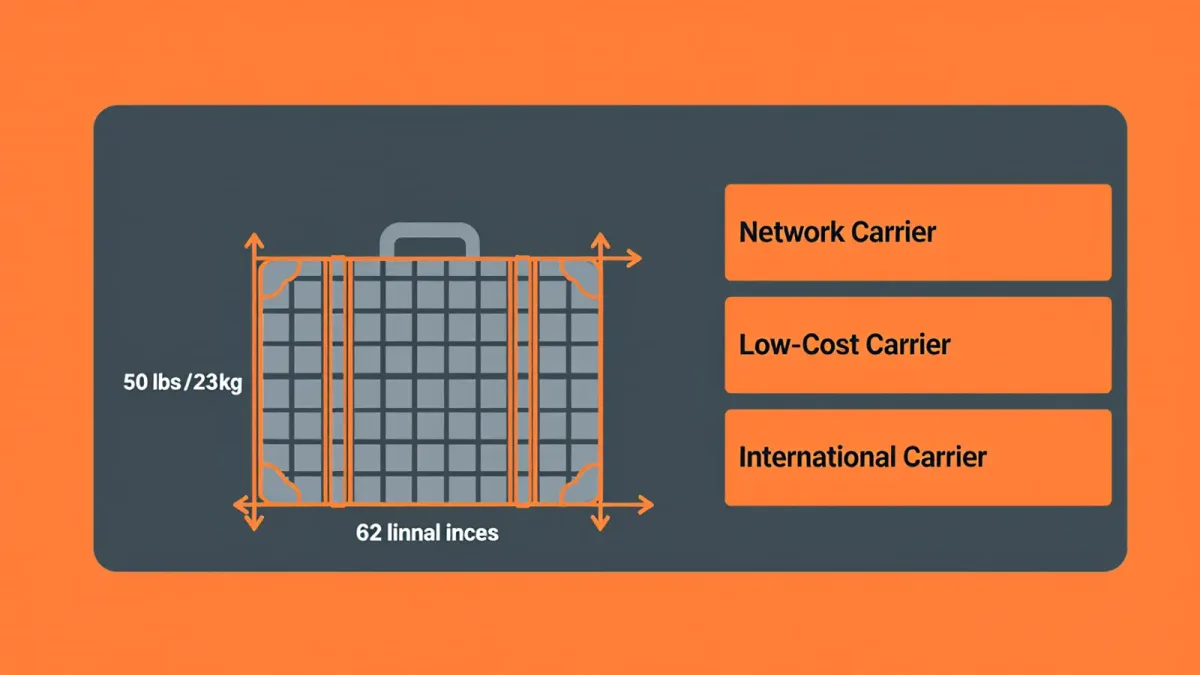
A first checked bag on the largest U.S. airlines costs $35-45 when paid online and $10-20 more at the counter, a second bag $45-55, and the industry collected billions annually from these fees in the years since 2008 when the first-bag charge became standard. Weight and size limits sit at 50 pounds and 62 linear inches per bag before surcharges of $100-200 apply, which is where most baggage pain actually originates — not the first-bag fee, but the overweight one.
The fee schedule looks uniform and is not: allowance varies by route, fare class, status and where the fee is paid. This guide maps the structure. AGLA News publishes information, not travel or financial advice; carrier fee tables change frequently and should be checked before flying.
What does a checked bag cost on each carrier type?
Three tiers cover the U.S. market. Network majors price the first bag at $35-40 online and the second at $45-50 on domestic routes, waiving both for elite members, premium-cabin passengers and co-branded cardholders. Low-cost domestic carriers price bags from about $30-40 in advance with dynamic pricing that rises toward departure — a fee structure that can double inside a week. International carriers vary by region: long-haul economy tickets on global network carriers typically include one or two bags in the fare, following the transatlantic convention, while basic-style international fares strip the allowance back out. On any booking, the airline's own baggage table for the specific route and fare is the controlling document.
Related stories: Why Airlines Overbook Flights and What Denied Boarding Compensation Pays · How Low-Cost Carriers Make Money: The Ancillary Revenue Machine Explained.
What triggers oversized and overweight charges?
Two limits generate most surcharges. Weight: 50 pounds (23 kilograms) is the standard economy allowance on U.S. domestic routes, and bags between 51 and 70 pounds typically incur $100-150, rising above that. Size: 62 linear inches — length plus width plus height — before an oversized fee in the same $100-200 range. Both surcharges stack when a bag trips both limits, and sporting equipment sits under special rules: skis and golf bags often fly at bag-fee rates if packed within standard dimensions, while bicycles generally require a fee and specific packing. The overweight fee is the most avoidable charge in air travel: a $30 luggage scale pays for itself the first time it prevents one.
Why did bags become a separate charge?
Because unbundling lets the airline price the base fare for the majority who travel light while monetizing the minority who check bags, and it shifts baggage cost off the fare where price-comparison screens compete. First checked bag fees appeared across the U.S. industry in 2008 amid fuel costs and have never left; DOT reporting since shows bag fees running in the billions of dollars annually industry-wide. The competitive equilibrium is stable — carriers that re-included bags on domestic routes found the market punished higher headline fares, so the unbundled structure holds, with allowance as a loyalty currency instead: elites and cardholders fly their bags free, which is precisely the stickiness the programs buy.
How do you pay less for bags?
Four levers work reliably. Pay online in advance — the airport counter premium is $10-20 per bag on most carriers and some airlines charge even more through the phone center. Status or a co-branded card waives the fee outright on the network majors, and a single cardholder's benefit often covers companions on the same reservation. Pack inside the 50-pound limit — the overweight surcharge dwarfs the bag fee itself. And on itineraries mixing carriers, check the allowance of the operating carrier on each segment, because the most restrictive bag rule on a connection governs the whole trip unless the fare rules say otherwise.