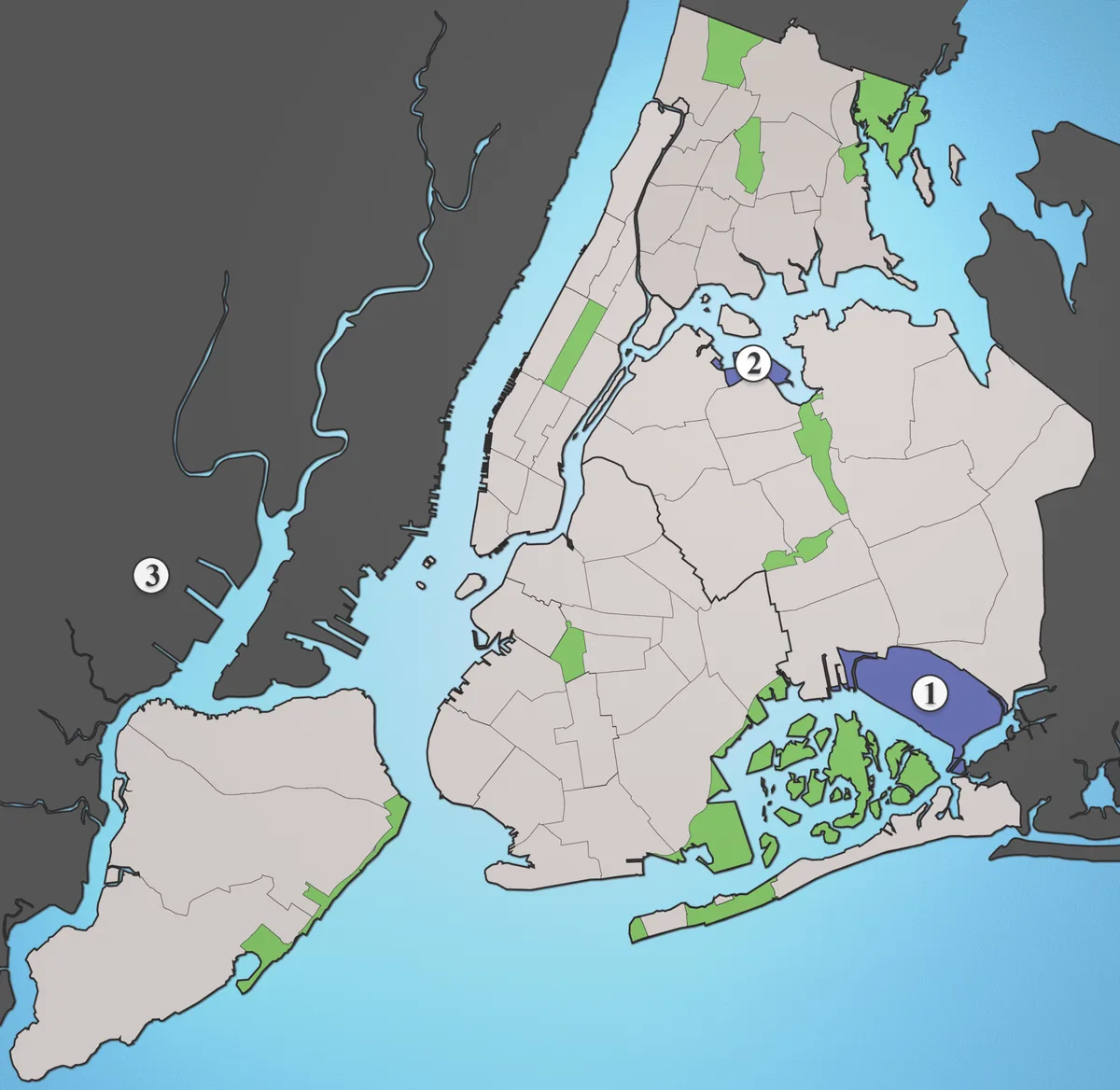
New York City is really served by three major airports. Picking the wrong one can cost you hours. John F. Kennedy International, LaGuardia, and Newark Liberty all sit close to Manhattan. Yet each one suits a different kind of trip.
This guide compares the three fields by location, routes, airlines, and rail access. Every figure below comes from public reference records. The key sources are linked in the text.
John F. Kennedy International: The Flagship
JFK is the primary global gateway for the New York area, according to Wikipedia. It sits in Queens, on the shore of Long Island, about 16 miles southeast of Midtown Manhattan. The field covers 5,200 acres. That makes it the largest airport in the metro area.
It is also the busiest of the three. Wikipedia ranks it sixth-busiest in the United States. Nearly 100 airlines fly from JFK to every continent where people live. American Airlines and Delta use it as a hub. JetBlue keeps its main base there. Travelers find five terminals and four runways, joined by the AirTrain rail loop. It links every terminal to the subway and the Long Island Rail Road at Jamaica and Howard Beach. Rides inside the airport are free. That makes transfers simple. Readers following this should also see Florida Airports Explained: Which Hub Fits Which Trip.
JFK opened in 1948 as New York International Airport. Most people knew it as Idlewild. It was renamed in 1963 after the assassinated president.
LaGuardia: The Short-Haul Specialist
LaGuardia Airport sits in East Elmhurst, Queens, on the shore of Flushing Bay. It covers 680 acres, so it feels far more compact than JFK. The site was established in 1929. It became a public airport in 1939, named after former mayor Fiorello La Guardia.
The airport serves mainly domestic routes, plus a short list of overseas ones. As of 2023 it ranked third-busiest in the New York area. Wikipedia puts it 19th in the country by passenger volume. Two rules shape every flight here. There is a curfew, and there is a perimeter rule. That rule bars most nonstop flights longer than 1,500 miles. American Airlines and Delta both keep hubs at LaGuardia. This connects to our earlier piece, How Airport Slot Rules Limit Flights at JFK, LaGuardia and Reagan National.
For years the airport drew fire for cramped, dated facilities. A multibillion-dollar rebuild was announced in 2015. The Port Authority finished the work in January 2025.
Newark Liberty: The New Jersey Gateway
Newark Liberty stands in the New Jersey cities of Newark and Elizabeth. It lies about 9 miles west-southwest of Manhattan, which often surprises visitors. For trips to downtown Manhattan by rail, it can be a smart pick.
The field is the second-busiest in the New York system, according to Wikipedia. It handled 43.4 million passengers in 2022. In 2023 it set its record with 49.1 million. United Airlines dominates here. Newark is its largest hub by available seat miles. United serves about 63 percent of the airport's passengers. The field is also a major gateway to Europe, South America, the Caribbean, and Asia. Rail access is a real strength. The AirTrain people mover links the terminals to a station served by NJ Transit and Amtrak.
The site has deep history. Newark began building its airport in 1928. The nation's first air traffic control tower opened there in 1930.
Which Airport Fits Your Trip?
- Long-haul global flights and the widest airline choice: fly JFK.
- Short domestic hops, especially to cities near New York: fly LaGuardia.
- United routes, New Jersey trips, and easy rail access: fly Newark.
Fares and flight times change daily. Compare all three fields before you book. A cheap ticket can shrink once you add a long taxi ride across town.
Conclusion
JFK, LaGuardia, and Newark each hold a clear role. JFK handles the world. LaGuardia handles the region. Newark anchors New Jersey with a strong global network of its own. Match the airport to your route and your final address, and the trip starts smoothly.