
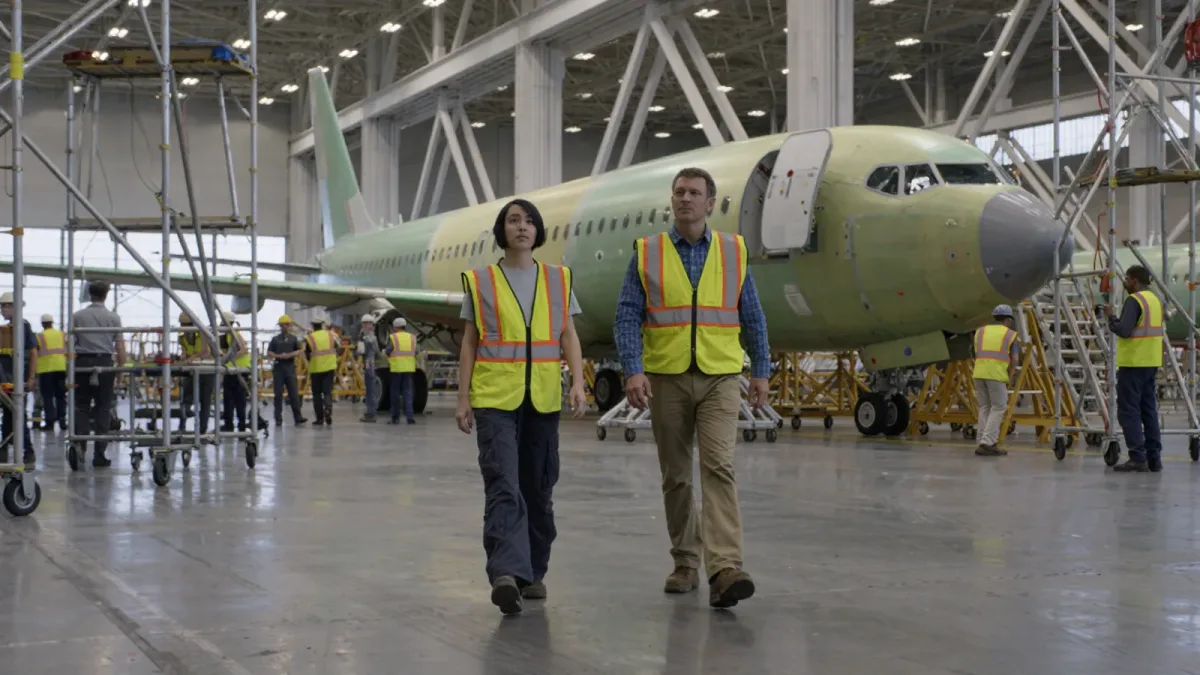
Boeing delivered 143 commercial aircraft in the first quarter of 2026 against Airbus's 114, per the quarterly compilations reported by trade press including Simple Flying and FlightGlobal in early April — the first quarter Boeing has beaten Airbus on deliveries since the 737 MAX crisis. The 29-aircraft gap extends the lead Boeing built in January and February, when monthly output of 46 and 51 jets outran Airbus's early-year rates.
How did Boeing close the gap?
Three numbers explain most of it. First, the 737 line: 38 of Boeing's 46 January deliveries were 737s as the Renton line ran past the disruption of the late-2024 strike. Second, steady widebody output kept the 787 program contributing despite the seat-related supplier rework noted in Reuters' February report. Third, timing: Airbus entered 2026 digesting a very strong December 2025, and its first-quarter deliveries — 114 against a full-year target announced at roughly 870 for 2026 — reflect the back-loaded rhythm the company has used for years, saving certificates and handovers for the final quarter.
On orders the picture is closer to parity in volume but different in shape, with Boeing's January intake unusually heavy per CNBC's February 10 report. Quarterly delivery rankings do not measure profitability or backlog quality; they measure the ramp, and in the first quarter of 2026 the ramp was in Renton and Everett.
Related stories: Boeing Delivered 51 Jets in February 2026 Despite 787 Seat Issue · Boeing Delivered 600 Commercial Jets in 2025, Led by 447 737s.
Why does a quarterly delivery race matter to travelers?
Deliveries become schedules. Carriers firm up summer 2026 timetables in spring, and each delivered narrowbody typically supports a new set of daily frequencies, while widebody slips push long-haul launches right. A 143-jet quarter at Boeing means more 737s and 787s arriving at U.S. and international carriers in time for the June schedule peak than would have under the 2025 pace of roughly 50 jets a month.
The quarter also resets a market-share narrative: per the early-April trade coverage, Airbus still led on orders and on 2025's full-year total, and the year-end leader depends on whether Boeing can hold rates above 45 a month through any certification or supplier hiccups.
What to watch in Q2
Airbus's April and May delivery counts, any FAA movement on 737 rate certifications above 38 per month, and clearance of the 787 seat rework. April's monthly figures, due in the second week of May, are the first test of whether the Q1 margin holds.