
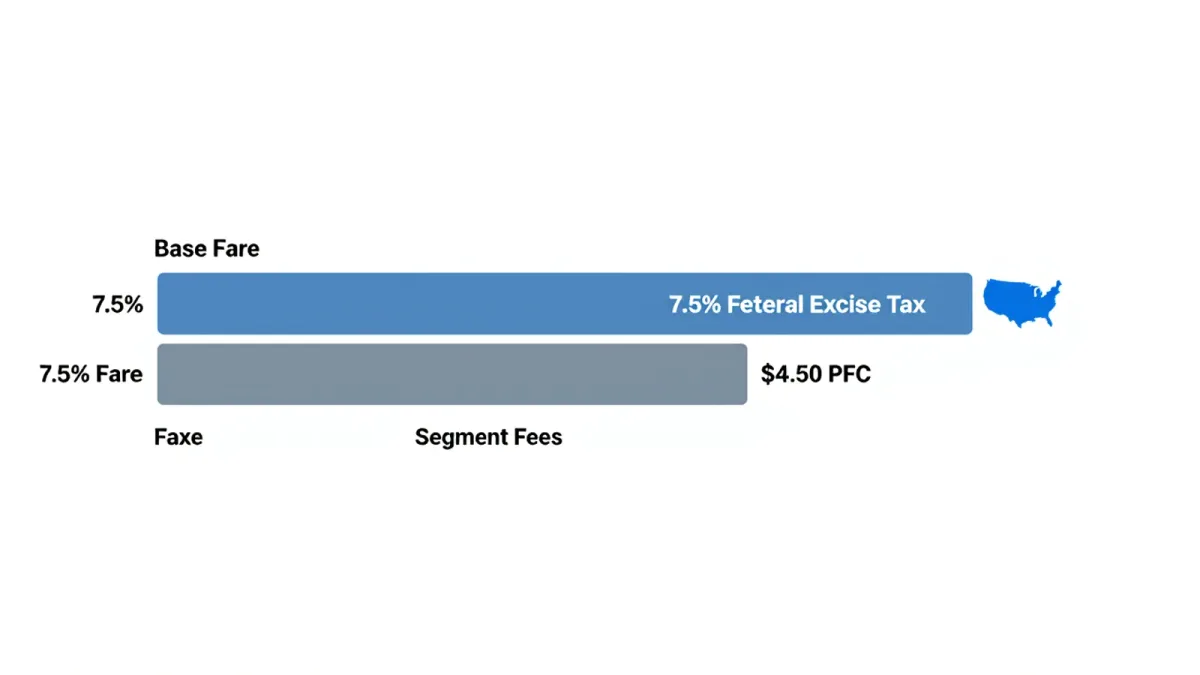
Three funding streams dominate U.S. airport finance: landing and rent charges paid by airlines, the federal Passenger Facility Charge of up to $4.50 per boarding passenger, and the airport's share of federal aviation trust-fund grants. The PFC, capped at $4.50 and unchanged since 2000, has funded billions in terminal and runway projects, and it is the line most travelers have paid dozens of times without reading it on the ticket's tax-and-fee breakdown.
The system matters to travelers because it decides what gets built, which airlines can serve an airport, and ultimately part of the fare. This guide explains where airport money comes from and where it goes. AGLA News publishes information, not financial or legal advice; current authority figures should be checked with the FAA and DOT.
What is a landing fee and who sets it?
A landing fee is the charge an airport levies per landed aircraft, computed from the aircraft's certified weight times a per-1,000-pound rate that each airport sets annually. Heavier aircraft pay dramatically more: a regional turboprop might owe tens of dollars per landing while a widebody owes several thousand. Airports also charge for gates, check-in counters, baggage-claim space and hangar rentals, and together these airline charges plus terminal concessions — food, retail, parking — make up an airport's operating revenue. U.S. airports are self-sustaining by law: federal policy requires them to cover their costs from their own revenue streams rather than general taxation, which puts rate-setting at the center of airport governance.
Related stories: TSA PreCheck, CLEAR and Global Entry Compared: Which Security Program Fits Your Travel · How to Sleep in an Airport: Terminals, Rest Zones and Hourly Hotels Compared.
What exactly is the Passenger Facility Charge?
The PFC is a per-passenger fee authorized by federal statute, up to $4.50 per boarding with a maximum of $18 on a round trip with connections. Airports apply to the FAA to impose it and to spend it on specific capital projects — terminals, runways, noise mitigation, safety equipment — and the FAA publishes every approved application. Charged since 1992 and capped at $4.50 since 2000, its real value has eroded by roughly half against construction inflation, which is why airport groups periodically lobby to raise the cap and airline groups oppose it. On a typical domestic round trip, the tax-and-fee section also includes the 7.5 percent federal excise tax and the segment fee, all of which fund the wider aviation system the airports draw on.
Who actually pays the landing fee?
The airlines pay it, but airline economics pass costs into fares. Where an airport's airline costs are high — congested hubs with new terminals and heavy debt service — carriers price those costs into every ticket sold there, and low-cost carriers route away from expensive fields entirely. This is the quiet mechanism behind route maps: a city pair disappears not because demand vanished but because landing fees, terminal rents and gate scarcity pushed the route's economics below the airline's return hurdle. Airport cost structure is route policy by other means.
How do you see any of this on your ticket?
DOT full-fare advertising rules require advertised prices to include taxes and fees, but the receipt-style breakdown after purchase itemizes them: the federal excise tax, segment fees, the PFC with the airport code it funds, and on international itineraries arrival and departure taxes of the foreign governments involved. Reading that block tells a traveler which airports are financing which projects — the $18 maximum PFC contribution on a multi-airport itinerary is spread across up to four airports' capital plans. For the traveler the takeaway is practical: airport funding is not an abstraction above the fare, it is itemized on it, and an expensive airport shows up in both the fee lines and the base fare the airlines set to cover it.