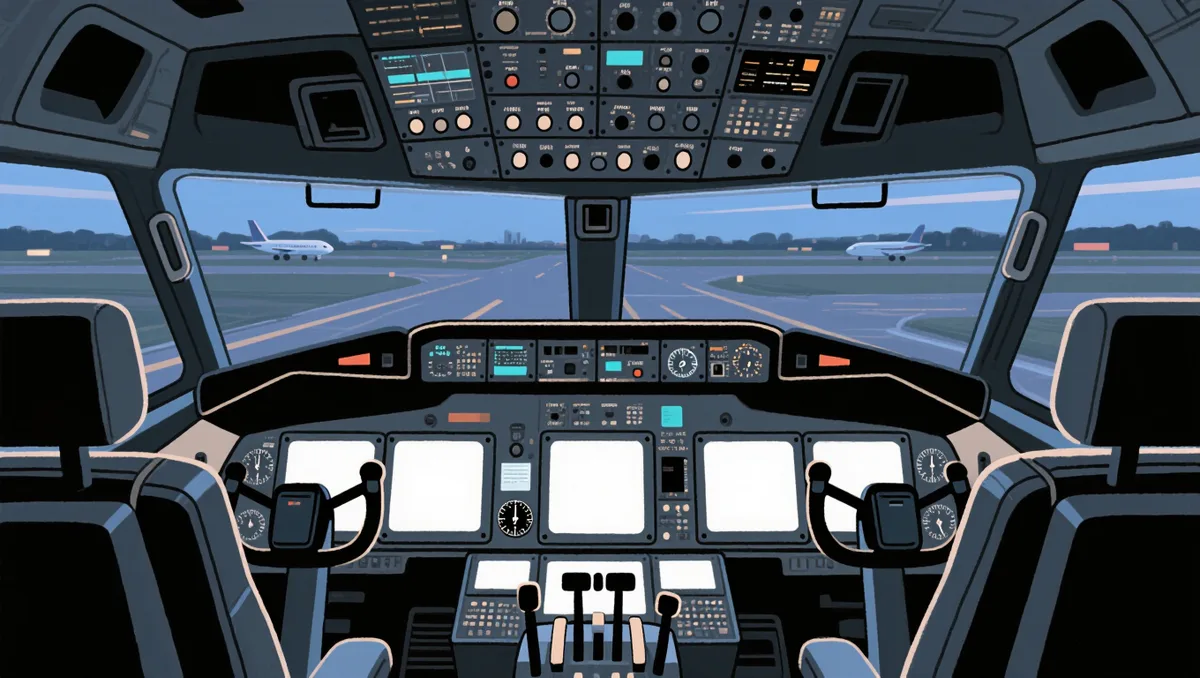
A glass cockpit is a flight deck where computer-driven liquid-crystal displays replace the bank of mechanical gauges that once covered the panel. Instead of dozens of separate dials showing altitude, speed and heading one instrument at a time, pilots read integrated screens that pull data from digital sensors and arrange it in one clear picture. Nearly every airliner built today flies with one.
For travelers, the change matters more than it might seem. The same displays that tidy up the panel also feed the automation that keeps flights on schedule, and they change how pilots are trained and checked. This guide explains what the screens show, why airlines made the switch, and what the trade-offs really are.
What did the old "steam gauge" cockpit actually look like?
Before screens, each piece of flight information had its own dedicated mechanical instrument: a round dial with a moving pointer, driven by air pressure, gyroscopes or electrical signals. A typical airliner panel carried an altimeter for height, an airspeed indicator, an attitude indicator showing whether the nose was up or the wings level, plus separate gauges for engine data, fuel and navigation. Each dial was its own device, with its own moving parts, its own failure modes and its own calibration schedule.
Pilots called these panels "steam gauge" cockpits, a nod to the old-fashioned plumbing-and-pointers feel of the arrangement. Reading one well took real skill. The pilot had to scan from dial to dial, build a mental picture of the flight from a dozen separate sources, and notice when any single instrument drifted out of line. The layout worked, but it asked a lot of the person doing the reading.
What exactly is a glass cockpit?
A glass cockpit replaces those individual dials with a small number of large, multi-purpose screens. The two core displays are the primary flight display, or PFD, which shows attitude, speed, altitude and heading together, and the navigation display, which shows the aircraft's position and route. A third screen type, the multifunction display or MFD, handles engine readouts, fuel and system status, and can switch between tasks as needed.
The screens themselves are liquid-crystal displays, the same flat-panel technology as a laptop screen, hardened for the vibration, temperature swings and altitude of airline service. Behind them sit computers that gather data from air-data sensors, inertial references, radios and the engines, then draw the picture the pilot needs. It is a cousin of the fly-by-wire idea: How Fly-by-Wire Works: The Computers Between Pilot and Control Surface explains how digital systems now sit between the pilot's hand and the control surfaces. Glass cockpits do the same for information: computers sit between the raw sensor data and what the pilot sees.
One small aside worth knowing: the displays only work because the panel material itself is up to the job. As Explain That Stuff notes, glass is made by melting sand at around 1700°C, and engineered glass can be made tough, transparent and resistant to heat, which is what lets it survive on a flight deck. The "glass" in glass cockpit is, at bottom, a very well-made flat screen.
Why did airlines and manufacturers make the switch?
Three pressures drove the change.
- Weight and space. A panel of mechanical instruments means many separate units, each with motors, gears and wiring. A few screens and their computers weigh less, take up less room and free panel space in a cockpit that pilots share with ever more equipment.
- Maintenance. A mechanical dial has moving parts that wear and need regular checks. A display is largely solid-state, so there is less to service and fewer single instruments to pull and replace.
- Safety of information. With dedicated dials, a failing instrument can quietly mislead. A digital system can compare sources, flag a disagreement and highlight it on screen instead of leaving the pilot to spot a drifting needle.
Costs fell too, as display technology matured and became cheaper than precision electromechanical instruments. That mattered beyond airliners: the same logic carried glass cockpits into business jets, small private aircraft and helicopters, where a single screen suite can replace a panel that once cost more than the rest of the avionics combined.
What do pilots actually gain?
The biggest gain is a cleaner mental picture. On a PFD, speed, attitude, altitude and heading sit side by side in a standard layout, so the pilot's eyes travel inches instead of across the whole panel. That reduces the chance of missing something during a busy phase of flight such as an approach in cloud.
The second gain is flexibility. A mechanical dial shows one thing forever. A multifunction display can show a map on one flight leg, an engine trend page the next, and a checklist or weather picture when needed. Information arrives when it is useful, not because the instrument that carries it happens to be bolted there.
The third gain is built-in alerting. Glass systems can detect when two sources disagree, when a sensor drops out, or when a limit is being approached, and put a clear warning in front of the crew. On older panels, spotting those problems depended on the pilot's scan. The screens do not remove the pilot's job of cross-checking, but they shorten the path between a problem and the moment someone notices it.
What are the trade-offs, and how does training change?
Glass cockpits are not automatically simpler to fly. They concentrate a great deal of information behind a few screens, so pilots learn display logic, menu structures and reversion modes, which is the term for what each screen shows when a computer or sensor fails. Manufacturers design the displays to fall back to a simplified, readable format, but crews still train for those cases in simulators.
There is also a skills question. A pilot who learned on dials can usually read a screen quickly; the reverse is harder, because the screens hide the underlying sensor logic. Training programs address this by teaching the raw data sources first, then the display layer on top, so the pilot understands what the picture is built from rather than trusting it blindly.
Finally, screens add new failure modes: a display unit can fail even when every sensor is healthy. Certification rules therefore require redundancy, with spare display capacity and independent power paths, so no single screen failure removes critical information. The design goal is that the worst realistic failure leaves the crew with a degraded but flyable picture.
What this means for travelers
None of this changes a passenger's experience directly. There is no seat, fare or schedule tied to the flight deck. But it does shape the safety and reliability picture behind every ticket. A flight deck that flags its own sensor disagreements, needs less instrument maintenance and presents information in a standard, trainable format supports the airline's operation in ways a panel of dials cannot.
It also connects the cockpit to the rest of the aircraft's digital systems. The same data that draws the PFD feeds the transponder that lets anyone watch a flight move on a map, as How ADS-B Works: The Broadcast Behind Every Live Flight Tracking Map explains. And the head-up display, a separate screen that projects key flight data onto the windshield, builds directly on the glass-cockpit idea, as covered in Head-Up Displays in Airliners: Why Pilots Keep Their Eyes Out of the Cockpit. Readers following this should also see How ADS-B Works: The Broadcast Behind Every Live Flight Tracking Map.
The evidence is straightforward: the glass cockpit replaced mechanical gauges because integrated displays are lighter, easier to maintain and better at warning crews when something is wrong. What remains unsettled is mostly human, not technical, namely how best to train pilots so the screens deepen understanding rather than replace it. That debate continues in flight-deck design and training standards, and it is the reason manufacturers still invest heavily in how information is presented, not just what the computers can compute. This connects to our earlier piece, Head-Up Displays in Airliners: Why Pilots Keep Their Eyes Out of the Cockpit.
For more on the systems inside a modern airliner, see the rest of the technology coverage.